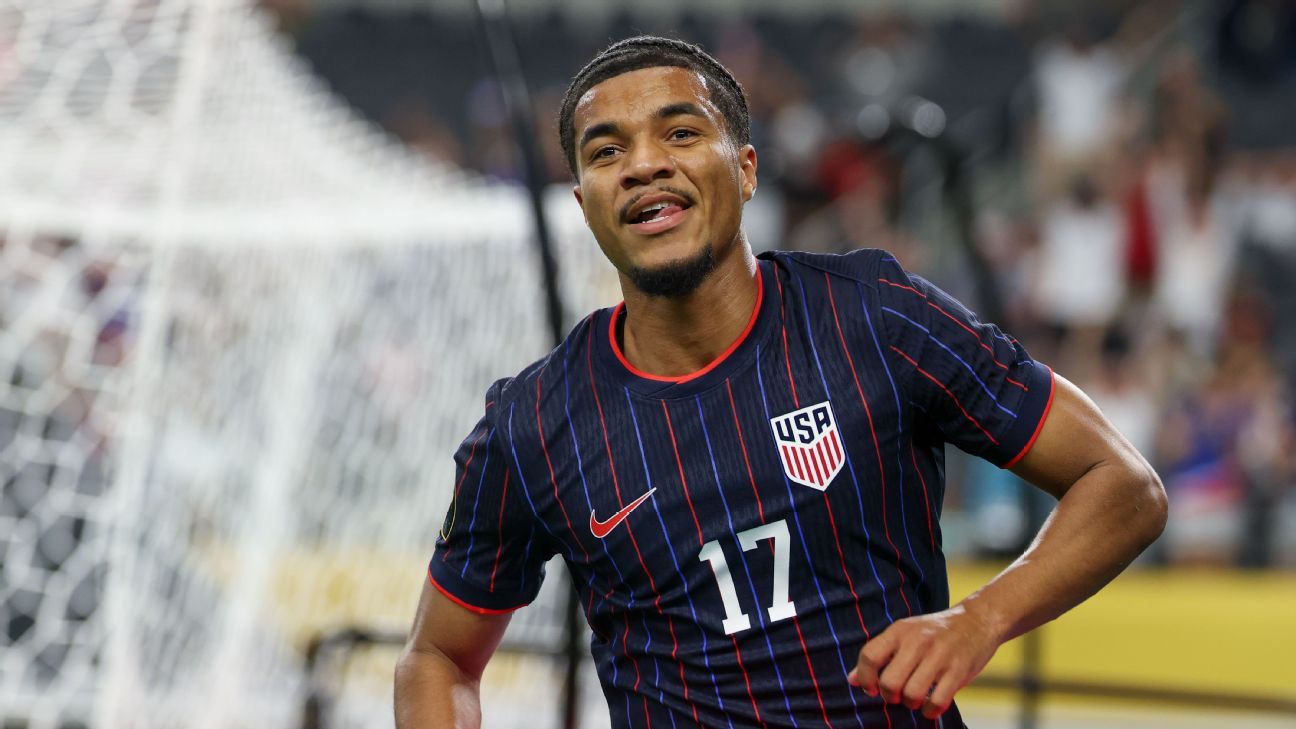
The journey of a professional footballer is often characterized by exhilarating highs and crushing lows, and for talented American midfielder Malik Tillman, his career narrative has, unfortunately, been significantly punctuated by the latter. A player of immense potential, Tillman has frequently found his momentum disrupted by a persistent and varied history of injuries. From his early days in the Bayern Munich academy to his recent pivotal role at PSV Eindhoven and now Bayer Leverkusen, the question of Malik Tillman's injury record looms large over discussions of his development and long-term trajectory. His most recent setback, an ankle injury sustained in a crucial match, once again raises concerns about his availability for critical fixtures, including an upcoming UEFA Champions League clash, casting a familiar shadow.
The sight of Tillman limping off the field after a challenge from Union Berlin's Stanley Nsoki, leaving him doubtful for Bayer Leverkusen's second-leg against Olympiacos, is a stark reminder of the physical demands of elite football and the vulnerability of even the most gifted athletes. As coach Kaspar Hjulmand noted, "It will be difficult with Malik. It hasn't been fully decided yet, but it doesn't look very good." This sentiment has become an all too familiar refrain for fans and coaches alike, highlighting a pattern of missed games and prolonged recovery periods that have undeniably impacted his progress.
A Chronology of Setbacks: Tracing Malik Tillman's Injury Journey
To truly understand the narrative of Malik Tillman's injury history, one must delve into a detailed timeline of the ailments that have kept him off the pitch. His struggles began remarkably early in his youth career, demonstrating a predisposition or perhaps simply a cruel twist of fate regarding physical fragility.
Early Career Hurdles: Major Layoffs and Development Impact
- Season 2018/19: Even as a teenager with FC Bayern Munich U17, Tillman experienced a series of knocks and unknown injuries, leading to 18 days out and 4 missed games. While minor, these early issues foreshadowed future challenges.
- Season 2020/21: This period marked arguably the most significant blow to his early development – a cruciate ligament tear suffered in October 2020. This devastating injury sidelined him for an agonizing 169 days, causing him to miss 25 games for FC Bayern Munich II. Recovering from such a severe ligament injury at a crucial developmental stage can have lasting physical and psychological effects, impacting explosiveness, confidence, and overall robustness. Following this, he also faced "fitness issues" for 97 days, missing another 10 games, suggesting a prolonged struggle to regain full match readiness. In total, the 20/21 season saw him out for 266 days, missing 35 games – a staggering amount for any player, let alone a burgeoning talent.
- Season 2021/22: While recovering, he also battled a "knock" (24 days, 6 games missed) and even the Corona virus (10 days, 2 games missed), further hampering his ability to build consistency with Bayern Munich and Germany U21.
Navigating Loan Spells and Senior Football Demands
As Tillman transitioned into senior football and subsequent loan spells, the nature of his injuries seemed to shift, but the frequency remained a concern:
- Season 2022/23: During his productive loan spell at Rangers FC, Tillman experienced two separate hamstring injuries. The first kept him out for 29 days (missing 4 games), and the second, occurring towards the end of the season, saw him sidelined for 61 days (missing 4 games for the United States). Hamstring issues are notoriously tricky and often recur if not managed meticulously, indicating potential underlying biomechanical factors or load management challenges.
- Season 2023/24: While on loan at PSV Eindhoven, Tillman again faced setbacks, including a "minor knock" (11 days, 2 games missed for the United States) and an "unknown injury" (13 days, 2 games missed). These shorter absences, though less severe, still interrupt rhythm and continuity.
- Season 2024/25: Another significant blow came in the form of a Syndesmotic ligament tear. This serious ankle injury kept him out for 70 days, resulting in a substantial 20 missed games for PSV Eindhoven and the United States. Such injuries are often the result of high-impact twisting movements and require extensive rehabilitation to prevent long-term instability.
Recent Challenges: The Cumulative Toll
Tillman's most recent season (2025/26, reflecting the future data in the context) with Bayer 04 Leverkusen paints a picture of recurring, albeit shorter, issues:
- A calf injury (27 days, 2 games missed).
- A muscle injury (19 days, 5 games missed).
- Most recently, ankle problems (4 days, 1 game missed) which culminated in the challenge against Union Berlin, casting doubt over his Champions League participation.
Cumulatively, over the recorded seasons, Malik Tillman has missed a remarkable number of days and games due to injury: 266 days and 35 games in 20/21, 90 days and 8 games in 22/23, and 70 days and 20 games in 24/25 stand out as particularly impactful periods. The constant cycle of injury, recovery, and re-injury can be mentally taxing for any athlete, let alone one trying to establish himself at the highest level.
The Impact on Performance and Development
The pervasive nature of Malik Tillman's injury history has undoubtedly had a profound impact on his career trajectory. For a young, developing player, consistent game time is paramount for honing skills, building match fitness, and cementing a place in the team. Missing significant chunks of seasons, especially during crucial developmental years, can hinder progress in several ways:
- Stifled Consistency: Regular absences prevent him from building a consistent run of form, making it harder to develop strong on-field relationships with teammates and understand tactical nuances without interruption.
- Delayed Development: Key physical attributes, tactical understanding, and technical proficiency are best developed through consistent training and competitive matches. Extended layoffs mean lost opportunities for this growth.
- Psychological Toll: The mental burden of recurrent injuries can be immense. The frustration of rehabilitation, the fear of re-injury, and the pressure to return can affect a player's confidence and enjoyment of the game.
- Limited Opportunity: Coaches are often hesitant to rely heavily on players with extensive injury records. This can lead to reduced playing time even when fit, or a more cautious approach to managing their minutes, potentially impacting their perceived value to the squad.
- Market Value and Transfers: While Tillman has moved to prestigious clubs, a recurring injury history can influence future transfer negotiations and contract renewals, as clubs assess the risk of investing in a player who may frequently be unavailable.
Analyzing Trends: Types of Injuries and Recovery Patterns
A closer look at Malik Tillman's injury list reveals a pattern of both traumatic (cruciate, syndesmotic tears, knocks from fouls) and non-traumatic (hamstring, calf, muscle strains, fitness issues) injuries. The presence of significant ligament tears suggests vulnerability to high-impact incidents, while the muscle strains point towards potential issues with load management, strength imbalances, or recovery protocols.
- Ligament Injuries: The cruciate and syndesmotic ligament tears are major events requiring long rehabilitation periods. These often result from sudden twists, impacts, or hyperextension, and while some are unavoidable due to contact, others can be mitigated by robust strength training around the affected joints.
- Muscle Strains (Hamstring, Calf, General Muscle): Recurring hamstring injuries, in particular, often indicate a need for deeper analysis into muscle imbalances (e.g., quad-to-hamstring strength ratios), flexibility, fatigue management, and proper warm-up/cool-down routines. These are often preventable through tailored strength and conditioning programs.
- Knocks and Ankle Problems: While some knocks are unavoidable in contact sports, a history of ankle issues, especially after a syndesmotic tear, suggests a need for ongoing proprioceptive training and ankle stability exercises to reduce recurrence.
The varied nature of his injuries underscores the complexity. It’s not a single weak point but rather a series of different vulnerabilities that have emerged throughout his career. This necessitates a comprehensive, holistic approach to his physical preparation and recovery.
Proactive Measures and Future Outlook for Malik Tillman
For a player of Malik Tillman's talent, overcoming this injury cycle is paramount to fulfilling his potential. Modern sports science offers numerous strategies to mitigate injury risk and optimize recovery:
- Individualized Strength and Conditioning: Tailored programs focusing on muscle balance, core strength, flexibility, and injury-specific strengthening (e.g., hamstrings, ankles after ligament tears) are crucial.
- Load Management: Close monitoring of training intensity, match minutes, and recovery periods is vital to prevent overtraining and fatigue-related injuries. This involves using GPS data, heart rate monitors, and subjective player feedback.
- Nutrition and Recovery: Optimal nutrition, hydration, sleep, and recovery modalities (massage, cryotherapy, active recovery) play a significant role in tissue repair and overall athlete resilience.
- Biomechanics Analysis: Detailed assessment of his running gait and movement patterns can identify inefficiencies or weaknesses that might predispose him to certain injuries, allowing for corrective exercises.
- Mental Resilience Support: Providing psychological support to cope with the frustrations of injury and maintain motivation is as important as physical rehabilitation.
- Proactive Communication: Open dialogue between Tillman, medical staff, coaching staff, and sports scientists is essential to manage his workload and respond quickly to any early signs of discomfort.
Malik Tillman possesses undeniable skill and vision, attributes that make him a valuable asset for any top-tier club. However, his extensive Malik Tillman injury history represents a significant hurdle. The challenge for him and his medical teams going forward will be to break this cycle, fostering a period of sustained fitness that allows his talent to consistently shine through. If he can achieve this, his potential to become a pivotal player for club and country remains immense, turning his narrative from one of recurrent setbacks to one of triumphant resilience.
In conclusion, while the current ankle concern ahead of the Olympiacos match is the latest chapter, it is merely one entry in a long and complex book documenting Malik Tillman's battle with injuries. His journey highlights the brutal realities of professional football, where even the most gifted players must conquer not just opponents, but also the fragility of their own bodies. With a focused, scientific, and patient approach, there is every hope that Tillman can navigate these challenges and finally unleash the full, consistent force of his considerable abilities on the world stage.